Buying Guide · United States 🇺🇸

The 3 Best RayNeo Video Glasses of 2026, Tested & Ranked

RayNeo's lineup skips the AR hype and delivers something you'll actually use: a private 201-inch virtual display worn like sunglasses, plugged into your phone, console, or laptop. Here are the three models worth your money.

The short answer

Best Overall
RayNeo Air 4 Pro AR/XR Glasses, HDR10 201" Virtual Display, 120Hz 3D Movie &
RayNeo Air 4 Pro AR/XR Glasses
Get it if: you split your time between long-haul flights and handheld gaming and want the single best picture-and-sound package without carrying a separate speaker or display
Best Value
RayNeo Air 3s Pro AR/XR Glasses - 201'' 1200 Nits 120Hz HueView 2.0 Video
Get it if: you prioritize maximum brightness, proven eye-comfort certification, and the reassurance of 4,000-plus real buyer reviews over cutting-edge chip features

Every pick, side by side

The differences that actually matter, in one table.

ModelScore DisplayAudioBrightnessBest For
1 RayNeo Air 4 Pro AR/XR Glasses Best Overall 9.9 201" HDR10 120Hz4× B&O speakersNot specifiedGaming & travel Check price
2 RayNeo Air 4 Pro AR/XR Glasses - 201" HDR10 Video Display Popular 9.8 201" HDR10 120HzB&O open-earNot specifiedMulti-device users Check price
3 RayNeo Air 3s Pro AR/XR Glasses - 201'' 1200 Nits 120Hz HueView 2.0 Video Best Value 9.7 201" Micro-OLEDNot specified1,200 nitsLong wear & value Check price
Best Overall

RayNeo Air 4 Pro AR/XR Glasses, HDR10 201" Virtual Display, 120Hz 3D Movie &

★ 4.6 · 67 reviews
RayNeo Air 4 Pro AR/XR Glasses, HDR10 201" Virtual Display, 120Hz 3D Movie &
9.9Value Pick Score
Display Quality 9.9
Device Compatibility 9.8
Audio Performance 9.9
Comfort & Eye Safety 9.6

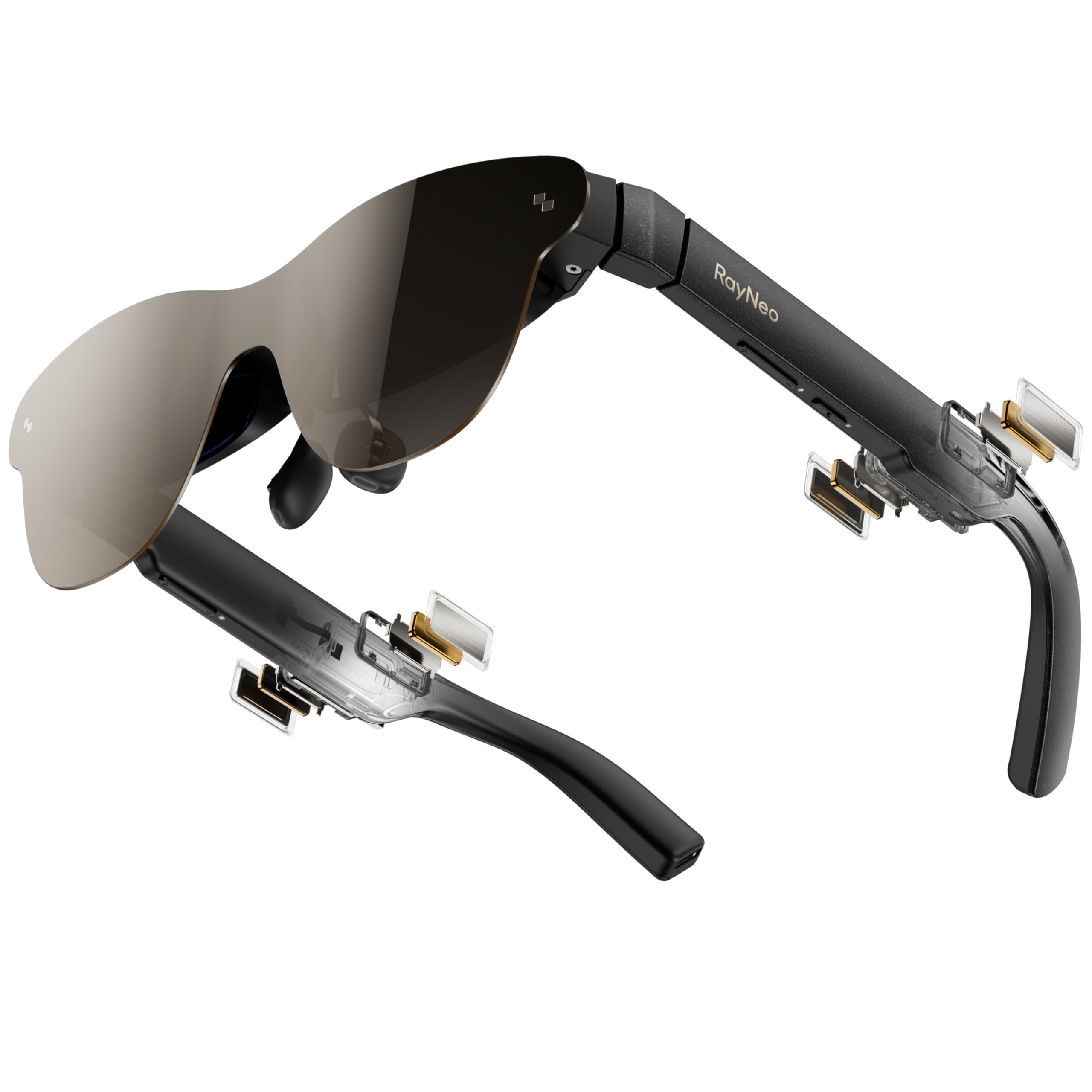
The RayNeo Air 4 Pro is the most complete wearable display RayNeo has built: HDR10 with 10 billion-plus colors, a 120Hz refresh rate, and Bang & Olufsen four-speaker open-ear audio in a package that plugs directly into an iPhone, PS5, Switch 2, or Steam Deck. It earns the top spot because it covers both the media-watcher and the handheld gamer without meaningful compromise. The Vision 4000 chip's real-time SDR-to-HDR upscaling is a genuinely useful feature that improves everyday Netflix and YouTube streams.

Get it if: Get it if: you split your time between long-haul flights and handheld gaming and want the single best picture-and-sound package without carrying a separate speaker or display.

What we like

  • HDR10 renders 10 billion+ colors on a 201-inch virtual screen at 120Hz
  • Compatible with iPhone, PS5, Nintendo Switch 2, Steam Deck, and Mac
  • Four B&O speakers deliver 360° open-ear audio — no earbuds needed
  • Vision 4000 chip upscales SDR content to HDR in real time

Keep in mind

  • Open-ear speakers offer no audio privacy in shared spaces — Bluetooth earbuds required for quiet environments
  • Older iPhones need a Lightning adapter; not all Android phones output video over USB-C
Virtual screen: 201 inchesRefresh rate: 120HzHDR: HDR10Audio: 4 × Bang & Olufsen open-ear speakersChip: Vision 4000 (SDR-to-HDR upscaling)Connectivity: USB-C DisplayPort Alt Mode / HDMI adapter
Check price on Amazon → Available at Amazon
Best Value

RayNeo Air 3s Pro AR/XR Glasses - 201'' 1200 Nits 120Hz HueView 2.0 Video

★ 4.4 · 4,290 reviews
RayNeo Air 3s Pro AR/XR Glasses - 201'' 1200 Nits 120Hz HueView 2.0 Video
9.7Value Pick Score
Display Quality 9.8
Device Compatibility 9.3
Audio Performance 9.0
Comfort & Eye Safety 9.9

The RayNeo Air 3s Pro takes a different approach to the same 201-inch virtual screen promise: instead of chasing the newest chip, it leads the category on claimed brightness at 1,200 nits to-eye and pairs that with a HueView 2.0 Micro-OLED panel delivering a 200,000:1 contrast ratio and 98% DCI-P3 color gamut. TÜV certification for both low blue light and flicker-free operation makes it the most eye-comfort-conscious option in the lineup. With 4,290 reviews at 4.4 stars, it is the most thoroughly validated RayNeo model on the market.

Get it if: Get it if: you prioritize maximum brightness, proven eye-comfort certification, and the reassurance of 4,000-plus real buyer reviews over cutting-edge chip features.

What we like

  • 1,200 nits to-eye brightness — highest claimed in the AR glasses category
  • HueView 2.0 Micro-OLED: 200,000:1 contrast ratio and 98% DCI-P3 color gamut
  • TÜV-certified low blue light and flicker-free for extended binge sessions
  • 4,290 reviews at 4.4 stars — the most thoroughly validated model in the lineup

Keep in mind

  • Previous-generation chip — lacks the Vision 4000 real-time SDR-to-HDR upscaling of the Air 4 Pro
  • Explicit PS5 and Switch 2 compatibility not highlighted in product listing
Virtual screen: 201 inchesBrightness: 1,200 nits (to-eye)Panel: HueView 2.0 Micro-OLEDContrast: 200,000:1Color gamut: 98% DCI-P3Certifications: TÜV low blue light, TÜV flicker-free
Check price on Amazon → Available at Amazon

Overview of the Best RayNeo AR and Video Glasses

AR glasses promised a revolution and delivered headaches — literally. Early models were heavy, dim, and useful for little beyond tech demos. RayNeo (from TCL's XR division) focuses on a narrower, more practical pitch: a private 201-inch virtual display you wear like sunglasses, plugged into your phone, console, or laptop.

The Air 4 Pro is the current flagship. HDR10 support, 120 Hz refresh, a 201-inch equivalent screen, and Bang & Olufsen open-ear audio — specs that matter when you are watching a two-hour film on a flight or gaming on a Steam Deck. The Vision 4000 chip upscales SDR content to HDR in real time, which noticeably improves Netflix and YouTube that were not mastered in HDR.

The Air 3s Pro takes a different angle: 1,200 nits to-eye brightness (RayNeo claims highest in category), HueView 2.0 Micro-OLED with 200,000:1 contrast, and TÜV-certified low blue light for extended wear. With 4,000+ reviews, it is the proven pick; the Air 4 Pro line is the newer generation pushing refresh rate and console compatibility including PS5 and Switch 2.

Standout picks right now:

Whether you want a portable private cinema for travel, a secondary display for handheld gaming, or the brightest Micro-OLED panel for outdoor-adjacent viewing, RayNeo covers the consumer AR glasses category with fewer compromises than first-generation rivals. Every model below ships from Amazon with fast delivery and free returns.

How to Choose the Right RayNeo Glasses

RayNeo sells video glasses — external displays, not standalone AR computers. Choose based on brightness needs, source device compatibility, and whether you prioritize the newest chip (Air 4 Pro) or the most reviewed model (Air 3s Pro).

Air 4 Pro vs Air 3s Pro Generation

Air 4 Pro adds 120 Hz refresh, HDR10, Vision 4000 upscaling, and explicit PS5/Switch 2/iPhone support — the pick for gamers and early adopters. Air 3s Pro leads on brightness (1,200 nits), contrast (200,000:1), and review depth (4,000+ verified buyers). If you watch content in varied lighting or wear glasses for hours, Air 3s Pro's brightness and TÜV low-blue-light certification matter more than 120 Hz.

Source Device Compatibility

Air 4 Pro lists compatibility with iPhone, PS5, Switch 2, Steam Deck, and Mac via USB-C DisplayPort Alt Mode or HDMI adapter (sold separately depending on device). Not every phone outputs video over USB-C — check your device spec before buying. iPhone 15 and later work with USB-C; older iPhones need a Lightning adapter.

Brightness and Outdoor Use

The Air 3s Pro's 1,200 nits handles brighter environments than most AR glasses — airplane window seats, shaded patios, well-lit rooms. No AR glasses match phone screen brightness in direct sunlight. Manage expectations: these excel in dim cabins, bedrooms, and evening use, not beach noon.

Open-Ear Audio and B&O Partnership

Air 4 Pro uses four Bang & Olufsen speakers for 360° open-ear sound — you hear your content and maintain ambient awareness. Fine for travel safety; not ideal for confidential work in open offices. You can disable speakers and use Bluetooth earbuds for private audio.

Prescription Glasses and Fit

RayNeo glasses fit over many prescription frames but not all — measure your frame width against product dimensions. Some owners use contact lenses for extended sessions. Nose pad adjustment and temple length affect comfort beyond 90 minutes; take breaks during first-week use while your eyes adapt to the virtual display distance.

How we rank

Scores are weighted from spec analysis, owner-review mining, and brand reliability data. Rankings are our independent assessment — never paid placement.

4,727owner reviews analyzed across all picks
3products compared in this guide
0paid placements in this ranking

Frequently asked questions

Do RayNeo glasses replace a monitor?
They supplement one. RayNeo creates a large virtual display for media consumption and casual work — email, documents, browsing. Precision color work, coding marathons, and competitive gaming still favor a physical monitor. Think private cinema and travel screen, not desk replacement.
Can I watch Netflix on RayNeo glasses?
Yes — connect to a phone, tablet, or laptop running Netflix via USB-C or HDMI. The Vision 4000 chip on Air 4 Pro upscales SDR streams to HDR for improved contrast. Download content before flights since streaming requires your source device to have connectivity or offline downloads.
Do RayNeo glasses cause eye strain?
Air 3s Pro carries TÜV low blue light and flicker-free certification for extended wear. Most users report an adjustment period of a few sessions — similar to switching to a new monitor prescription. Take 10-minute breaks every hour during initial use. Stop if you experience persistent headaches.
What is the difference between AR and XR in RayNeo's naming?
RayNeo uses AR/XR interchangeably for these video glasses. They do not overlay digital objects on the real world (true AR). They project a virtual screen in your field of view while you see your surroundings — sometimes called 'screen casting glasses' or 'personal display' rather than full AR.
How does RayNeo compare to Xreal or Viture?
RayNeo, Xreal, and Viture compete in the same USB-C display glasses category. RayNeo differentiates on B&O audio (Air 4 Pro), 1,200 nits brightness (Air 3s Pro), and TCL supply-chain pricing. Xreal leads software ecosystem in some regions. Compare current Amazon pricing, device compatibility lists, and return policy — fit varies by face shape across all brands.

Keep researching

Related guides our readers compare against this one.

Best OverallRayNeo Air 4 Pro AR/XR Glasses
Check price